
Centralizing Insights: Building a Unified Research Repository
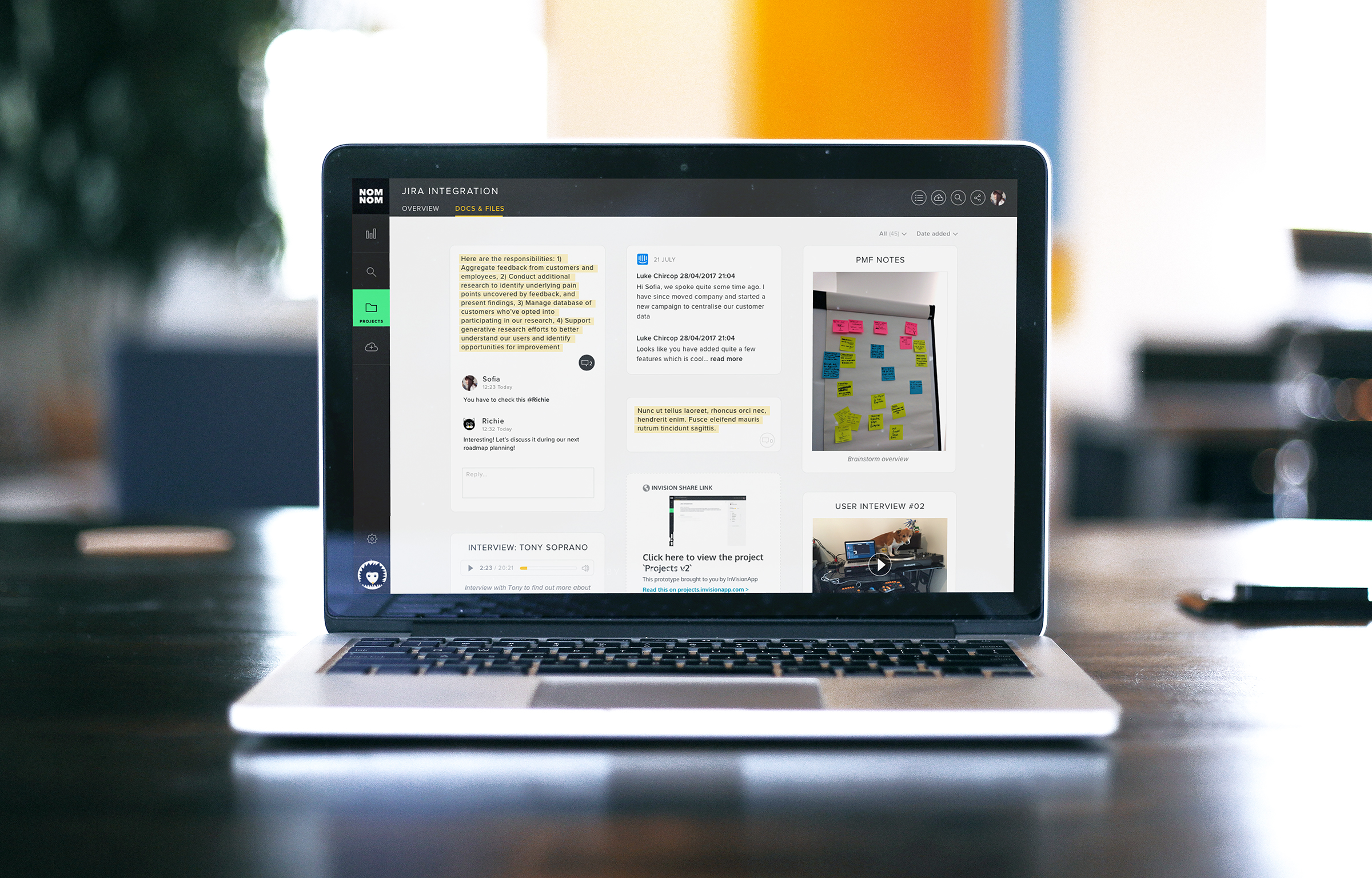
NomNom, now EnjoyHQ, is a customer research platform that centralizes feedback from various sources, enabling teams to identify trends and insights from customer communication. The platform allows users to store, tag, and organize qualitative data across tools and sources, making it easier to extract patterns and share findings.
Acquired by User Testing.
Understanding the Problem: Research Chaos
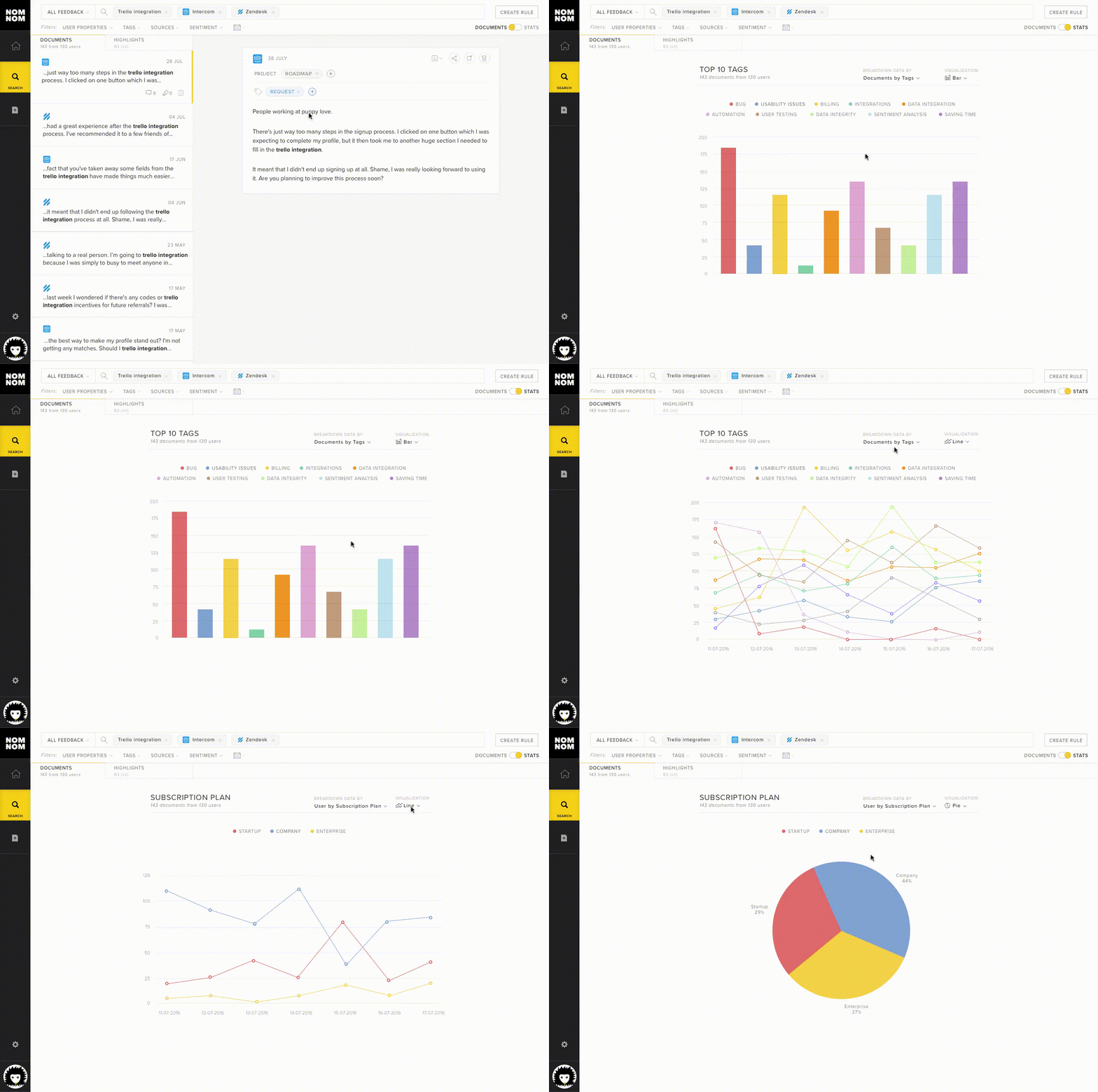
Prior to the redesign, EnjoyHQ faced challenges in providing a cohesive and intuitive experience for users managing diverse research data. Users encountered difficulties in navigating and organizing their insights, leading to inefficiencies in accessing valuable information. The existing interface lacked clear visual hierarchy and intuitive workflows, hindering users from fully leveraging the platform’s capabilities.
My Mission: Streamline Research Workflows
The objective was to redesign EnjoyHQ’s interface to enhance usability and
streamline the process of managing and accessing research data. Key goals included:
Designing Solutions: From Data to Clarity
To address these challenges, the following steps were undertaken:
01. User Research and Analysis
Conducted interviews and usability tests with existing users to identify pain points and gather feedback on their experiences with the platform.
02. Information Architecture Overhaul
Redesigned the information architecture to create a logical and intuitive structure for organizing research data, ensuring easy navigation and access.
03. Interface Redesign
Developed high-fidelity prototypes incorporating a clean visual design, consistent typography, and intuitive navigation elements to enhance user experience.
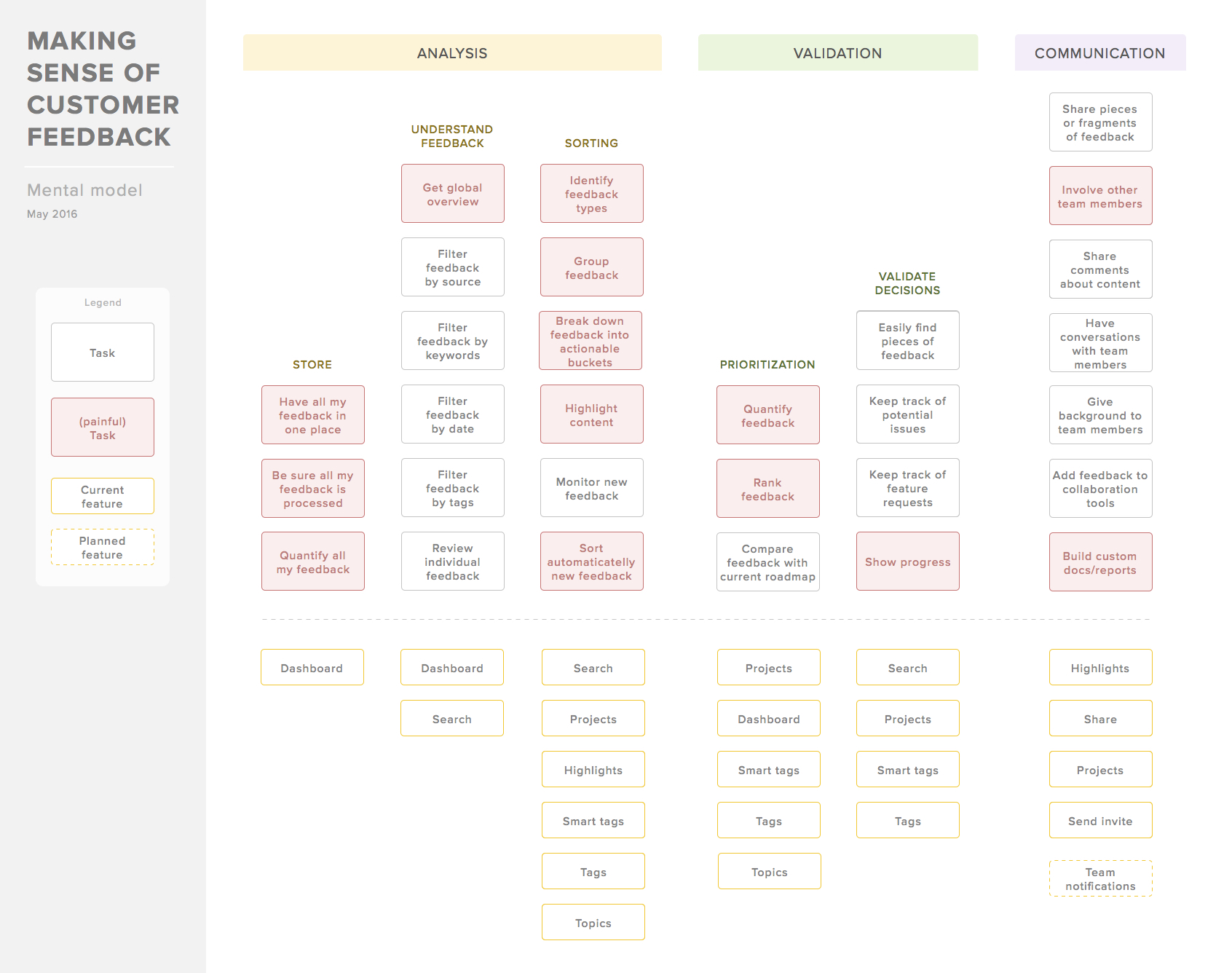
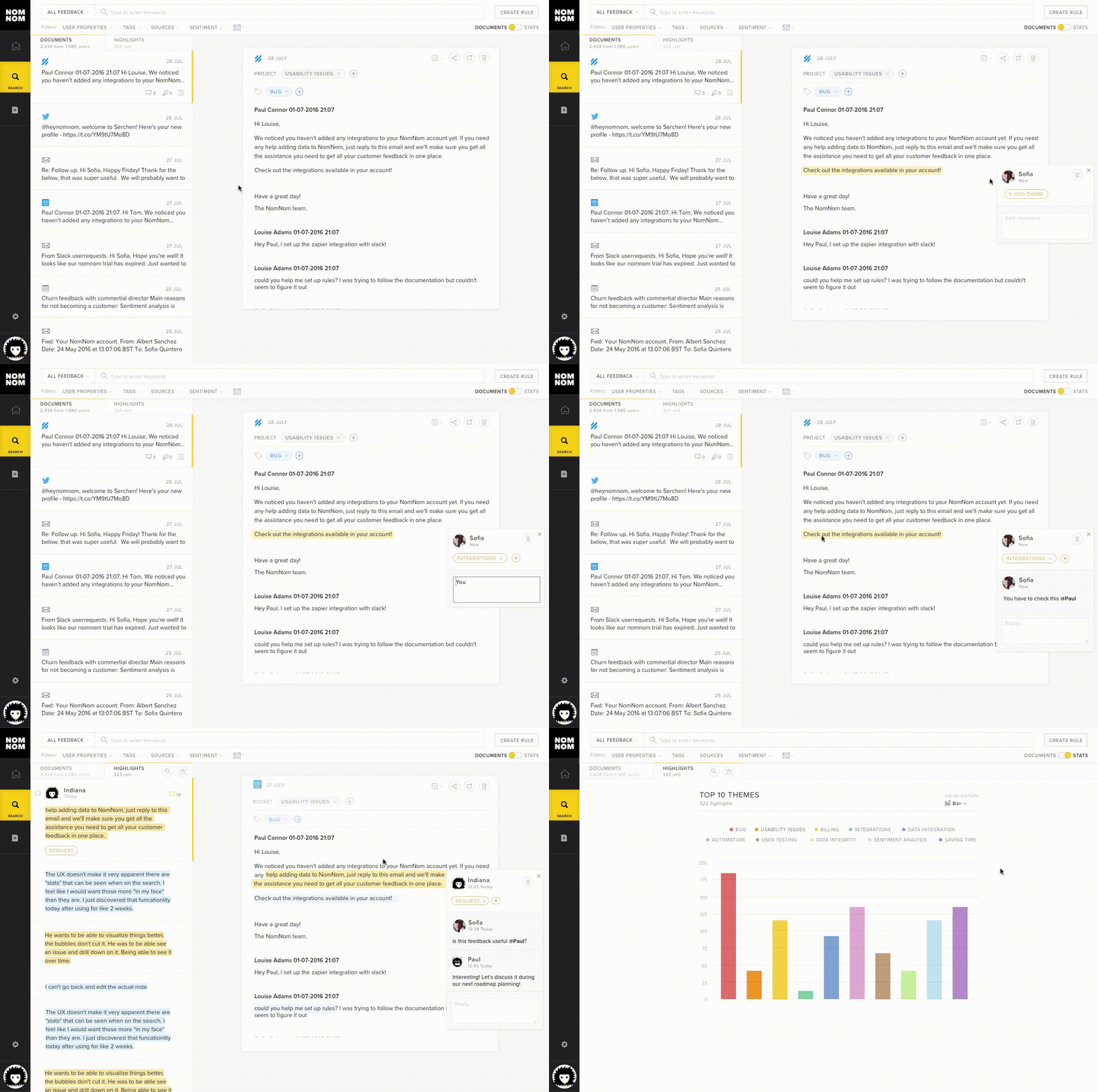
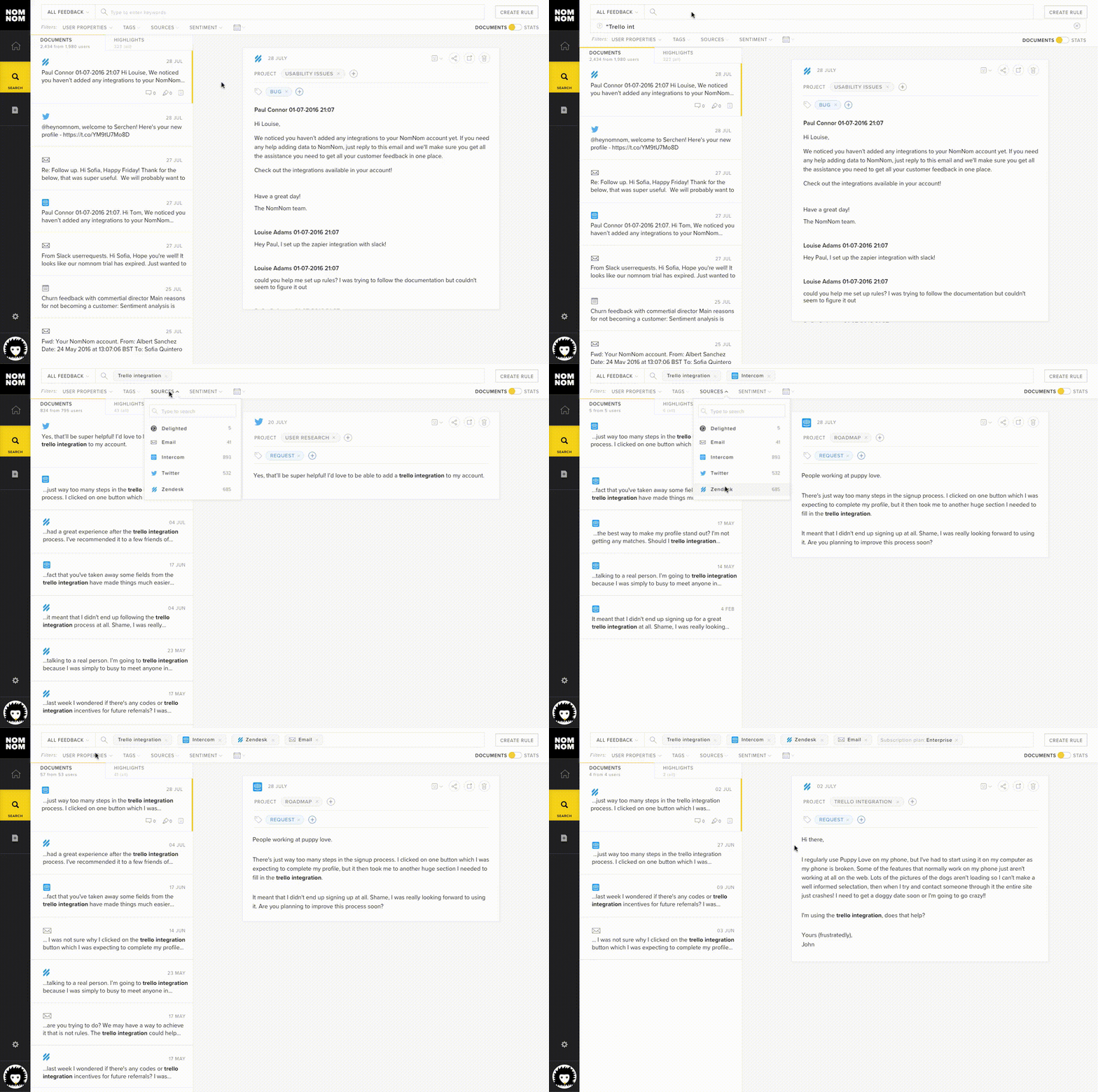
Introduce highlighting, tagging, and commenting features to better organize user feedback, along with statistical tools to enable quantitative analysis.
04. Enhanced Search Functionality
Implemented advanced search features, including filters and tags, to allow users to quickly locate specific insights and data points.
05. Collaboration Features
Integrated tools for sharing and collaborating on research findings, enabling teams to work together more effectively.
06. Testing and Iteration
Conducted multiple rounds of usability testing to refine the design and ensure it met user needs and expectations.

Impact and Results
Our data-driven, iterative design approach led to significant improvements:
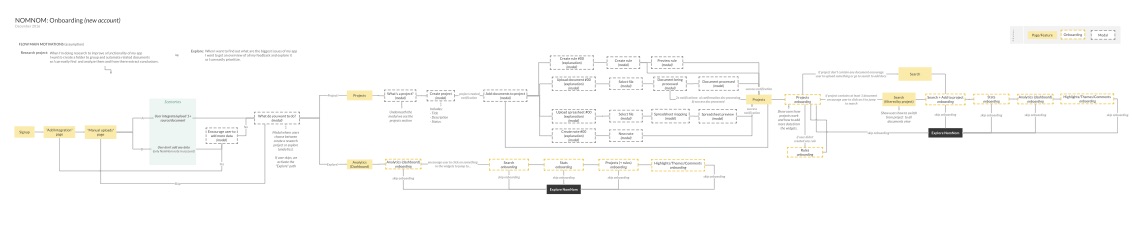
7
increase in user retention by improving onboarding experience
Lessons Learned: Designing for Real Users
This project highlighted the importance of user-centered design in building effective tools for research and collaboration. Engaging with users throughout the design process ensured that the final product aligned with their needs and expectations. Additionally, adopting an iterative design approach—with continuous testing and refinement—helped create more intuitive and effective interfaces. Collaboration with cross-functional teams further enhanced innovation, resulting in comprehensive and well-rounded solutions.
Overall, involving users early, iterating thoughtfully, and fostering collaboration proved essential for delivering a product that truly supports research and teamwork.
Beyond the Redesign: Scaling Design & Collaboration
Beyond the core redesign, additional contributions included:
-
Design System Development: Established a comprehensive design system to maintain consistency across the platform and streamline future development.
-
Onboarding Enhancements: Improved onboarding processes to help new users quickly understand and utilize the platform’s features.
-
Training and Support Materials: Created documentation and tutorials to assist users in maximizing the platform’s capabilities.
-
Performance Optimization: Collaborated with the development team to enhance the platform’s performance, ensuring a smooth and responsive user experience.

Explore More
Explore More
Explore More
Explore More
Transforming IoT Data into a Seamless UX at Evrythng
Transforming IoT Data into a Seamless UX at Evrythng
AI-Driven Workflows at Process Street