
Redefining Onboarding
to Drive Growth
Zapier is a powerful no-code automation platform that connects thousands of apps. It offers huge capability, but faced a critical problem: many new users didn’t understand its value quickly, got overwhelmed, or dropped off before creating their first automation (a “Zap”).
The Drop-Off Dilemma
When I joined the Growth team, the first-time user experience looked deceptively simple: sign up, see a short onboarding flow, and then… get lost.
The numbers were clear:
-
Many users never created their first automation (“Zap”).
-
A generic onboarding flow ignored why they signed up and which apps they cared about.
-
Without an early “aha!” moment, users dropped off and rarely came back.
The paradox was obvious: Zapier’s strength, its flexibility, was also the barrier to adoption.

My Mission
Redesign onboarding so new users could experience Zapier’s value quickly and personally.
Designing for First Wins
My goal was to help users feel, “Zapier just works for me,” within their very first session
Identify Pain Points
Analyze user journeys and data to discover where users stall and why they drop off.
Guide to Success
Design an onboarding flow that leads users to create their first Zap, rather than just explaining features.
Personalized Journeys
Tailor onboarding experiences based on users’ apps and workflows to make the experience relevant.
Cross-Functional Collaboration
Work closely with product and engineering to implement solutions that deliver measurable impact.
From Discovery to Design
To tackle these challenges, we adopted a rapid experimentation and iterative design approach
01. Listening to Users
I started by digging into the data and the people behind it:
- Analytics revealed where drop-offs spiked, often right after signup, before users even attempted a Zap.
- Interviews using the Jobs-to-Be-Done framework uncovered a deeper truth: users didn’t want “automation,” they wanted relief from repetitive tasks in tools they already used.
02. Reimagining Onboarding
With that insight, I reframed onboarding from “here’s what Zapier is” to “here’s how Zapier helps you.”
I designed:
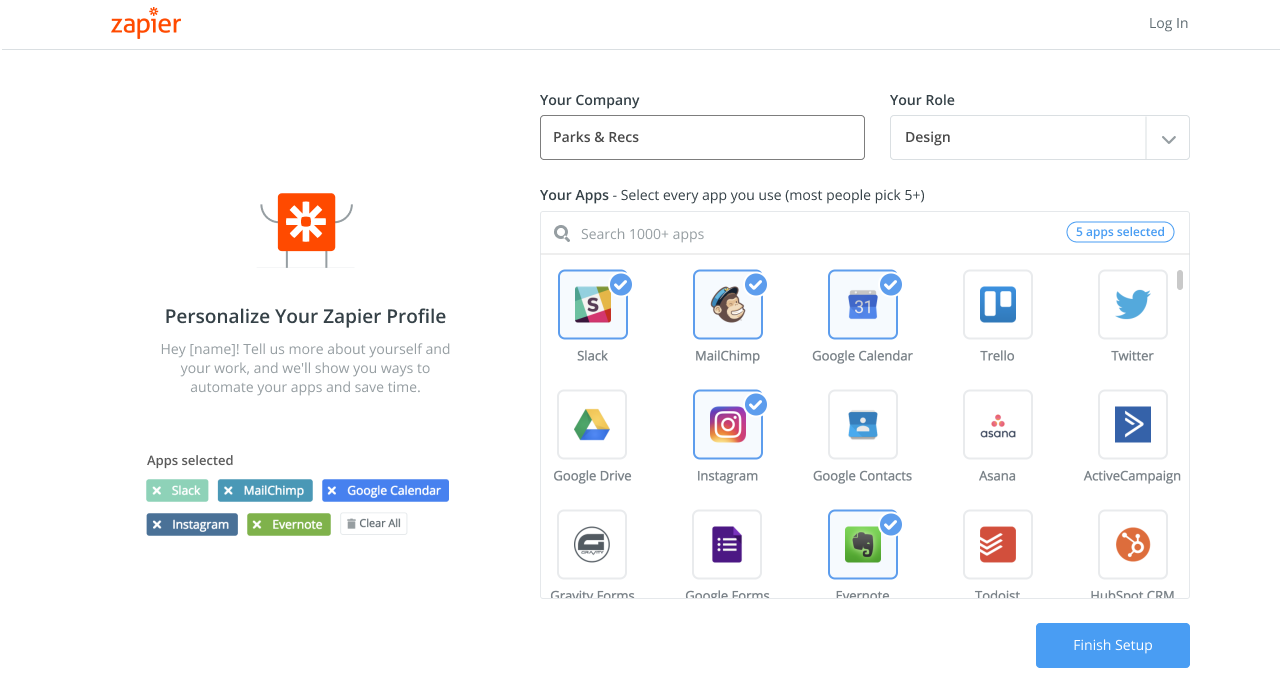
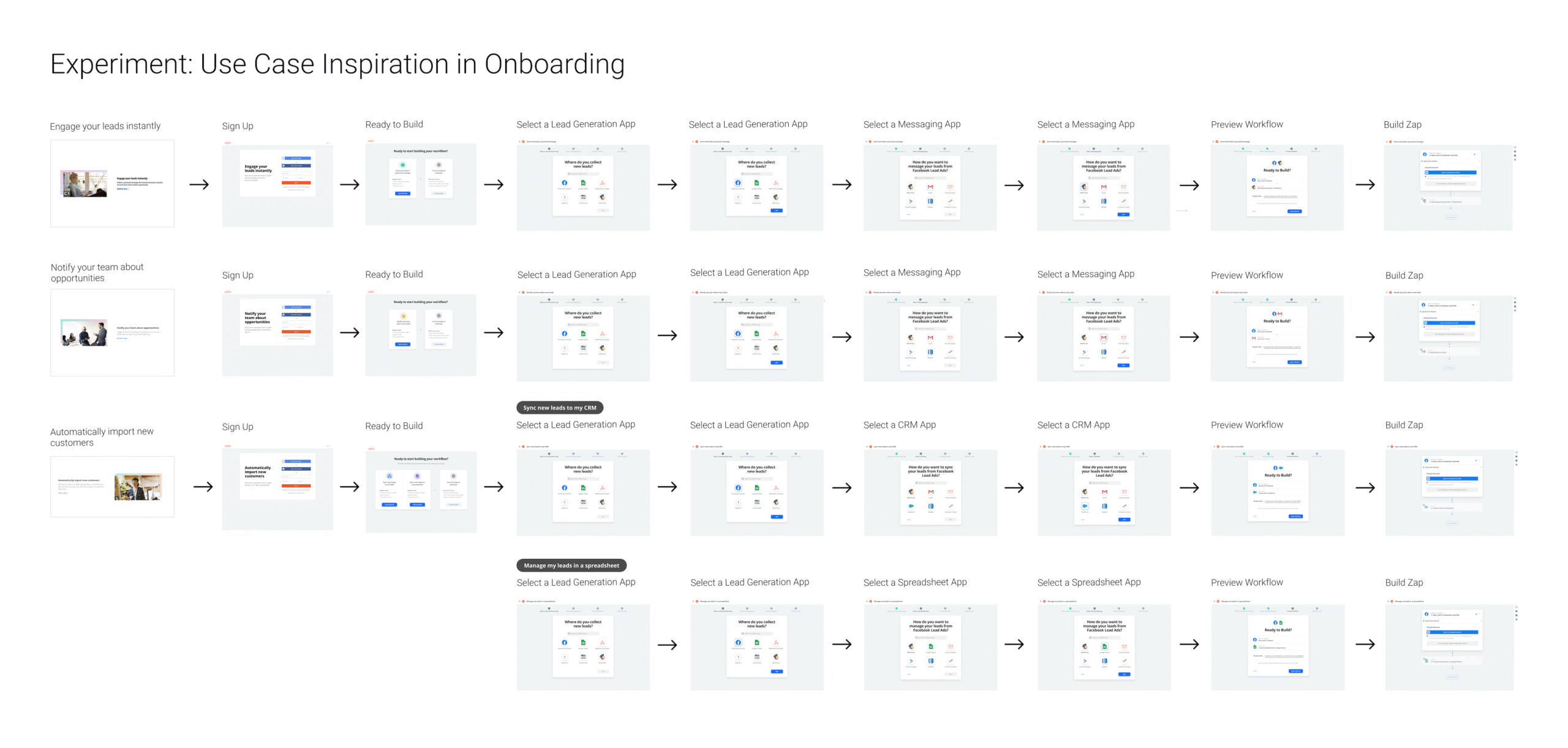
- Use-Case–Driven Onboarding – users selected the apps they worked with (Slack, Google Sheets, Gmail, etc.), which instantly shaped their onboarding path.
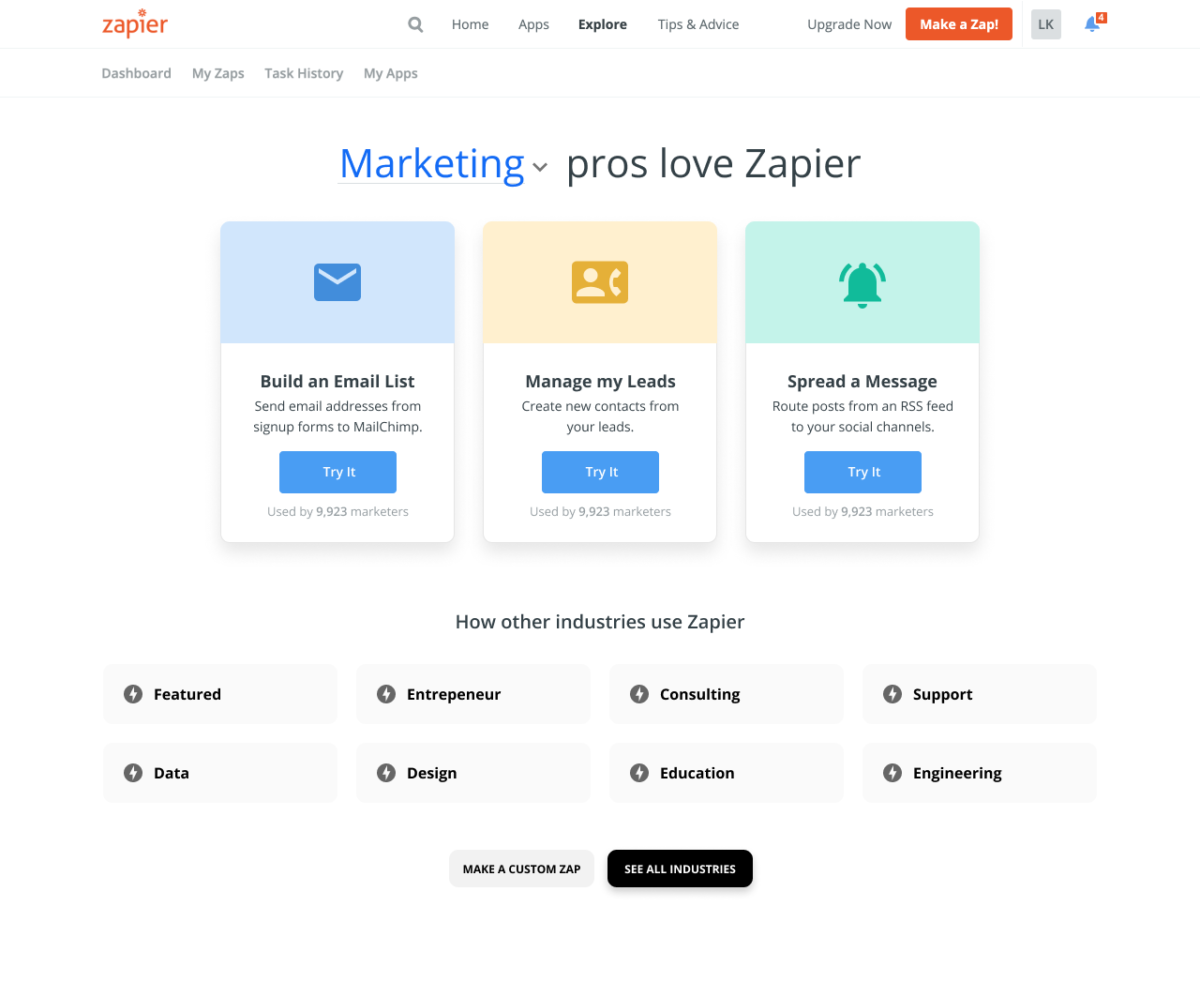
- An Inspiration Gallery MVP – instead of abstract instructions, users saw real, pre-built Zaps relevant to their tools and goals.
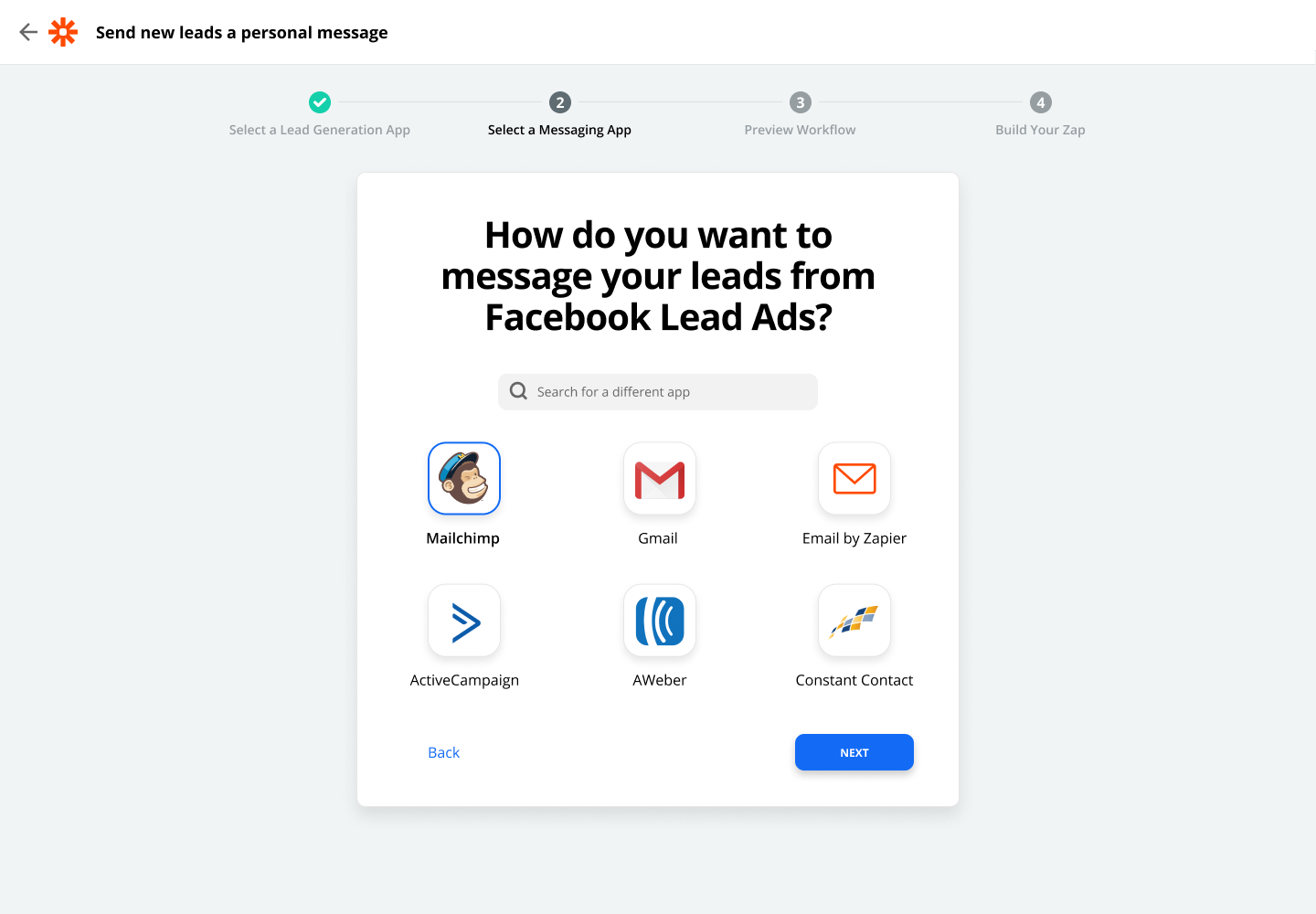
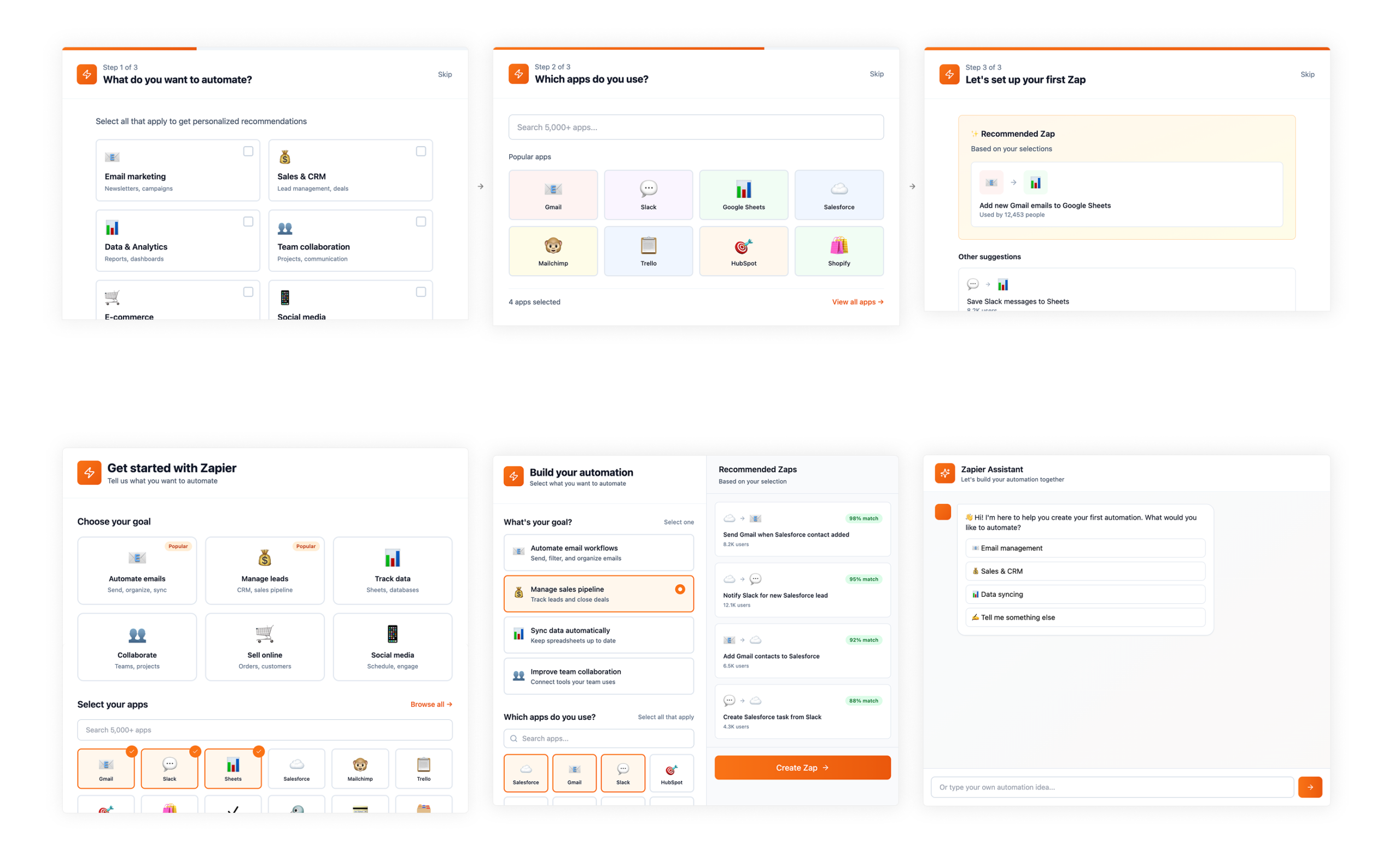
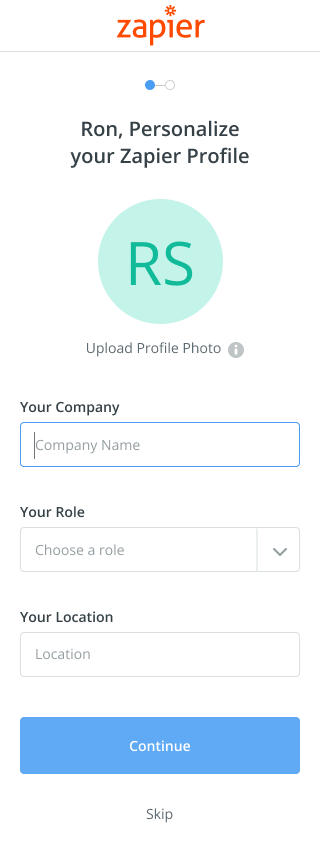
For onboarding we explored early concepts for presenting information and choices to users in a clear, sequential way during onboarding. These concepts aimed to reduce cognitive load and guide users step by step toward meaningful actions.
We gathered feedback through internal reviews and sessions with external users to validate clarity, pacing, and overall usability.
03. Rapid Iteration & Testing
To validate, I built lightweight prototypes and ran A/B experiments:
-
Does showing relevant templates early spark more Zap creation?
-
Does narrowing choices reduce overwhelm or limit discovery?
We learned fast, improved wording, simplified choices, and fine-tuned visuals until the flow felt intuitive and motivating.
04. Driving Alignment
I also:
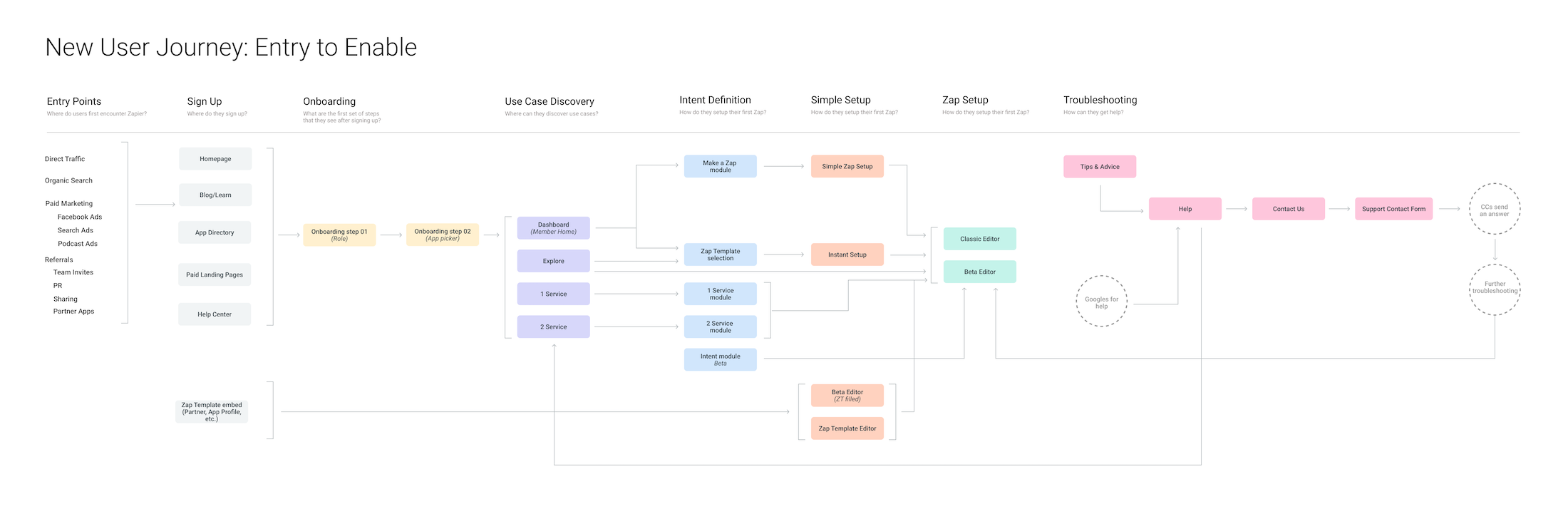
- Created an opportunity tree to map problems, experiments, and expected outcomes—this became a shared strategy artifact.
- Championed two-week design sprints, which helped us test more ideas, faster.
- Partnered with engineers to update design system components for onboarding, ensuring consistency and scalability.

Results: A Faster Path to “Aha”
The impact was immediate and measurable:
6
increase in new users creating their first Zap
12
reduction in onboarding drop-off
What I Learned
Personalisation isn’t just a nice-to-have, it’s the unlock. When users see something that truly matters to them, adoption follows quickly. In onboarding, clarity matters more than comprehensiveness; the goal is to guide, not overwhelm.
Design’s role is connective. By framing opportunities visually and strategically, I helped PMs, engineers, and designers rally around the same goals.
Other Contributions
Beyond onboarding, my work also had ripple effects:
-
Design System Evolution – expanded components to support future onboarding experiments.
-
Process Innovation – drove adoption of two-week design sprints across the team.
-
Mentorship – guided junior designers through experimentation, sharing feedback and frameworks.
-
Cross-Team Impact – shared learnings with other product teams, influencing retention and growth strategies beyond Activation.

Explore More
Explore More
Explore More
Explore More
AI-Driven Workflows at Process Street
AI-Driven Workflows at Process Street
Centralizing Insights: A Unified Research Repository for EnjoyHQ